
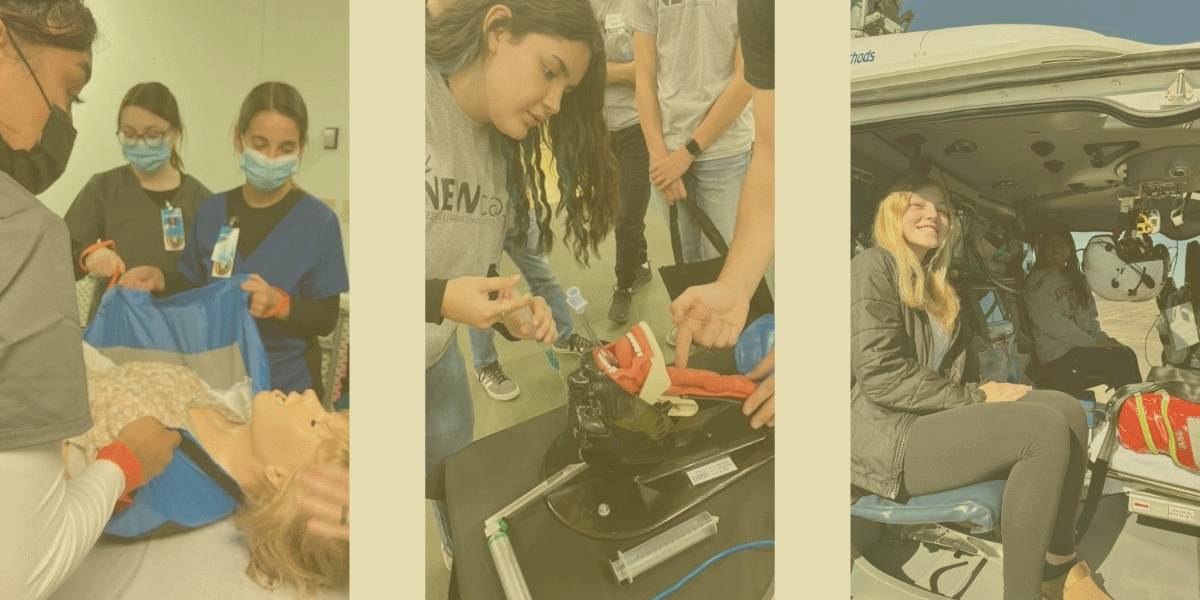
Healthcare

Neosho School District Healthcare

Courses

10103: Program Support Lab

Course Credit 2

This course serves as a required companion enrollment for students participating in select dual credit programs offered through Crowder College in Automotive/Diesel, Manufacturing/Technology, or Healthcare pathways.

Program Support Lab functions as a placeholder course to account for the additional instructional time, lab hours, or clinical experiences required to successfully complete these Crowder College dual credit courses. While students complete their coursework and hands-on learning through Crowder College, this course ensures proper scheduling, attendance tracking, and high school credit alignment.

The course carries unweighted high school credit and does not include separate assignments or grading beyond participation in the associated dual credit coursework. 

Only one enrollment per semester is required, even if a student is enrolled in multiple eligible dual credit courses during the same term.

6601: Healthcare Explorations

Healthcare Explorations is an introductory course designed to expose junior high students to the wide range of careers within the healthcare field. Students will explore how healthcare professionals work together to support individual and community health, while gaining an understanding of basic medical concepts, terminology, and systems.

Through hands-on activities, interactive projects, and real-world examples, students will investigate healthcare pathways such as nursing, medicine, allied health, mental health, public health, and emergency services. Emphasis is placed on developing foundational skills including communication, teamwork, professionalism, ethical decision-making, and problem-solving—skills essential for success in any healthcare career.

Students will also learn about personal wellness, disease prevention, and the role of healthcare in society, helping them make informed decisions about their own health while building early awareness of future college and career opportunities. This course is designed to spark curiosity, build confidence, and help students begin identifying interests related to healthcare pathways in high school and beyond.

6602: NEWcaps Dual Enrollment Crowder College Phlebotomy Techniques (ALLH-106)

Course Credit 0.5

Phlebotomy Techniques is an introductory course that prepares students for entry-level skills in phlebotomy. Students will learn proper venipuncture procedures, specimen collection, and the basic laboratory tests commonly associated with phlebotomy practice.

This course is taught as a combined lecture and laboratory experience. Students are introduced to foundational concepts and then provided opportunities to develop and practice essential skills in a supervised lab setting. Emphasis is placed on safety, accuracy, infection control, patient interaction, and professionalism.

This course provides foundational preparation for students interested in healthcare careers, laboratory sciences, or further training in phlebotomy.

6603: Dual Enrollment Crowder College Electrocardiography (EKG) (ALLH-107)

Course Credit 0.5

Electrocardiography (EKG) is an introductory course that prepares students to understand and perform basic electrocardiographic procedures. Students will learn proper lead placement, operation of EKG equipment, and identification of normal and abnormal heart rhythms.

This course is taught as a combined lecture and laboratory experience. Students are introduced to foundational concepts and then provided opportunities to develop and practice essential EKG skills in a supervised lab setting. Emphasis is placed on accuracy, patient safety, medical terminology, and professionalism.

This course provides foundational preparation for students interested in healthcare careers, including medical assisting, nursing, and other allied health fields.

6604: Dual Enrollment Crowder College Certified Nursing Assistant (CNA-101)

Course Credit 0.5

Certified Nursing Assistant is a preparatory course designed to enable students to work in hospitals, clinics, nursing homes, or home health care settings while providing basic nursing care. This course introduces students to the healthcare delivery system, the roles of the healthcare team, and essential patient care responsibilities.

Students will develop skills in medical observation, patient assessment, documentation, and reporting techniques. Emphasis is placed on professionalism, communication, safety, and ethical responsibility in patient care. Certified Nursing Assistants—also known as nurse’s aides, orderlies, patient care technicians, or home health aides—work under the supervision of a nurse and assist patients with daily living activities.

6605: Dual Enrollment Crowder College CNA Clinical Experience (CNA-105)

Course Credit 0.5

CNA 105 is a clinical preparatory course designed to provide students with hands-on experience in hospitals, clinics, nursing homes, or home health care settings while delivering basic nursing care. This course focuses on applying knowledge and skills learned in the classroom to real-world healthcare environments.

Students are required to complete 100 hours of supervised clinical experience, gaining practical exposure to the healthcare delivery system, teamwork within the healthcare setting, medical observation, documentation and reporting techniques, and patient assessment. Emphasis is placed on professionalism, safety, communication, and ethical responsibility in patient care.

This course supports skill development necessary for entry-level employment and certification as a Certified Nursing Assistant.

6606: Health Science I

Course Credit 1

This course introduces students to foundational concepts and skills essential for success in a wide range of healthcare careers. Students will explore academic foundations related to healthcare, including basic medical terminology, anatomy and physiology concepts, and applied math and science skills. Emphasis is placed on effective communication, professionalism, and employability skills needed in healthcare settings.

Students will examine healthcare systems and delivery models, legal responsibilities, ethical principles, and patient rights while developing an understanding of safety practices and infection control. The course also introduces teamwork, health maintenance practices, and the role of information technology in healthcare environments. Through classroom instruction, hands-on activities, and real-world scenarios, students will build a strong foundation for advanced healthcare coursework and career exploration.

6607: Health Science II

Course Credit 1

This course builds upon the knowledge and skills developed in Healthcare I, with a deeper focus on technical skills, critical thinking, and real-world application in healthcare settings. Students will further develop academic foundations and advanced communication skills, including documentation, patient interaction, and professional collaboration within healthcare teams.

Emphasis is placed on healthcare systems, legal and ethical responsibilities, safety practices, and employability skills as they apply to complex and evolving healthcare environments. Students will engage in more advanced technical skill development, health maintenance practices, and the use of information technology specific to healthcare operations and patient care. Through applied learning experiences, simulations, and problem-solving activities, students will prepare for postsecondary healthcare pathways, industry credentials, and future careers in the health sciences.

6608: Dual Enrollment Crowder College Patient Care Technician (ALLH-110)

Course Credit 0.5

Patient Care Technician is a preparatory course designed to develop the personal traits and professional skills required for students to perform as competent entry-level patient care technicians in a hospital or clinical setting.

Students will be introduced to providing basic patient care, obtaining and interpreting EKG readings, monitoring and recording vital signs, performing phlebotomy procedures, and providing emotional support to patients and their families. Emphasis is placed on professionalism, communication, safety, teamwork, and ethical responsibility in healthcare environments.

This course provides foundational preparation for students interested in healthcare careers and supports continued training or certification in patient care and allied health fields.

6609: Dual Enrollment Crowder College Basic Pharmacology (ALLH-130)

Course Credit 0.5

This course introduces students to the foundational knowledge and skills required for safe and effective blood collection in healthcare settings. Students will review the anatomy and physiology of major body systems with an emphasis on the circulatory system and its role in specimen collection. Instruction includes an overview of common medications, their mechanisms of action, and how medications are absorbed, metabolized, distributed, and excreted, with attention to how these processes may impact phlebotomy procedures and patient care.

Students will explore proper venipuncture techniques, patient identification and communication, infection control, safety practices, and legal and ethical responsibilities related to specimen collection. Emphasis is placed on professionalism, teamwork, and accurate documentation within healthcare environments. Through hands-on practice and simulated clinical experiences, students will develop the technical skills and confidence necessary for entry-level phlebotomy training and continued study in healthcare pathways.

6610: Dual Enrollment Crowder College Community Health Community Health Worker (ALLH-115)

Course Credit 0.5

This course prepares students to understand the role of community health professionals in bridging the gap between healthcare providers and underserved populations. Students will explore how trusted community members serve as a link between individuals, healthcare systems, and social service agencies to improve access to care, quality of services, and overall health outcomes.

Emphasis is placed on public service, effective communication, cultural awareness, and navigating local community resources. Students will engage in discussions, collaborative projects, and an on-site clinical shadowing experience to develop an understanding of community-based health needs, cultural beliefs, and advocacy strategies. Through real-world learning experiences, students will gain insight into population health, health equity, and careers focused on serving diverse communities.

6611: Dual Enrollment Crowder College Phlebotomy Techniques (ALLH-106)

Course Credit 0.5

Phlebotomy Techniques introduces students to the knowledge and hands-on skills required for safe and effective blood collection in healthcare settings. Students will learn proper venipuncture procedures, specimen handling, and an overview of common laboratory tests and their purposes. Emphasis is placed on patient identification, communication, infection control, safety practices, and professional standards.

This course is delivered as a combined lecture and laboratory experience. Students are introduced to core concepts through classroom instruction and then provided opportunities to practice and refine their skills through supervised, hands-on lab activities. By the end of the course, students will have developed foundational technical skills and professional behaviors necessary for continued phlebotomy training and entry-level healthcare pathways.

6612: Dual Enrollment Crowder College Medical Terminology (PNUR-111)

Course Credit 0.5

This course introduces students to the language of healthcare by explaining and applying basic medical terminology. Students learn how medical terms are formed through the study of word roots, combining vowels, prefixes, and suffixes, enabling them to understand and interpret medical language accurately.

Course content includes foundational anatomy, correct spelling and pronunciation of medical terms, and commonly used medical abbreviations. Emphasis is placed on building vocabulary skills that support effective communication in healthcare settings.

This course provides essential preparation for students pursuing careers in healthcare, nursing, allied health, and related medical fields.

6613: Dual Credit Crowder College Medical Terminology (PNUR-111)

Course Credit 0.5

This course introduces students to the language of healthcare by explaining and applying basic medical terminology. Students learn how medical terms are formed through the study of word roots, combining vowels, prefixes, and suffixes, enabling them to understand and interpret medical language accurately.

Course content includes foundational anatomy, correct spelling and pronunciation of medical terms, and commonly used medical abbreviations. Emphasis is placed on building vocabulary skills that support effective communication in healthcare settings.

This course provides essential preparation for students pursuing careers in healthcare, nursing, allied health, and related medical fields.

6614: Health Care Workbased Learning

Course Credit 2

This course provides students with authentic, hands-on experience in healthcare settings through structured work-based learning opportunities. Students apply classroom knowledge in real-world environments while gaining exposure to patient care, healthcare operations, and professional expectations within the medical field.

Students may participate in school-based or community-based placements such as hospitals, clinics, long-term care facilities, or other approved healthcare settings. Experiences may include observing and assisting healthcare professionals, supporting patient care activities within allowable guidelines, practicing professional communication, and following healthcare protocols related to safety, confidentiality, and ethics.

Throughout the course, students develop essential employability skills including teamwork, communication, empathy, attention to detail, and professionalism. Students are expected to document their learning, reflect on skill development, and complete required work-based learning hours aligned with program expectations.

Healthcare Work Based Learning supports students exploring careers in nursing, allied health, medical assisting, patient care, and other healthcare-related fields by providing meaningful exposure to real-world healthcare environments and strengthening postsecondary and career readiness.